
Elevate Your DIY Gifts with Easy Tricks for a Luxe Look
Busy friends and family members who love giving thoughtful presents, but don’t feel “crafty”, often hit the same wall: DIY handmade gifts can come out looking homemade in the wrong way, and no one wants their effort to read as cheap. Between tight budgets and high expectations, the challenge is making luxury-looking presents from affordable gift ideas without overbuying supplies or second-guessing every detail. The good news is that perceived value rarely comes from expensive materials; it comes from intention, gift personalization, and the kind of creative gift wrapping that signals care before the gift is even opened. This is about earning that quiet “wow” reaction.
Understanding What Makes a Gift Feel Premium
At its core, making a handmade gift look expensive is a three-part framework: personalize it, design it with intention, and present it like a finished product. Personalization makes it feel “made for me,” design choices make it feel considered, and presentation signals quality before anyone touches what’s inside.
This matters because perceived value is about meaning and clarity, not price tags. The growth of the personalized gifting market reflects how much people reward small details that feel specific. Think of it like your own return on investment, where return on investment becomes emotional impact per dollar.
Picture a simple candle: add a custom scent note, a clean label, and crisp packaging, and it suddenly reads boutique. Same materials, higher polish, and the receiver assumes more care went into every step. That same polish starts with clean, shareable inserts, even when they begin as handwritten notes.
Turn Handwritten Notes Into Print-Ready PDF Gift Inserts
Once you know “premium” is often just thoughtful finishing, your handwritten extras become an easy place to level up. If you include a recipe card, care instructions, or a little note with a handmade gift, turning that handwritten page into a clean PDF instantly makes the whole present feel more intentional, like something from a boutique rather than your kitchen table. Snap a clear photo of your note, do a quick cleanup so it looks bright and crisp, then familiarize yourself with how to convert JPG to PDF so that you can turn that image into a neatly formatted document in seconds. The result is a polished insert you can print or share digitally, and that tiny detail reads as “professional” to the person receiving it.
Try 9 Easy Upgrades That Make Simple Materials Look Pricey
A gift can be made from the simplest budget-friendly materials and still read as “boutique” with a few intentional upgrades. I use these creative gift-making techniques when I want elegant handmade gifts without starting over (or spending more).
- Choose one “hero” material and keep the rest simple: Pick a single element that feels high-end, thick paper, a linen ribbon, a glass jar, a smooth tin, and build the gift around it. This is the real-life version of quality over quantity: one great touch beats five random ones. When everything else is neutral, that hero piece looks even better.
- Create a matching “set” with tiny labels and inserts: Group small items into a coordinated trio (for example: soap + hand salve + washcloth) and give them one consistent label style. Some of the same benefits of digital printing, such as personalization and consistent print quality, can also help elevate handmade gifts. Add the print-ready PDF insert you made from your handwritten note, care instructions, a recipe card, or a short story about why you chose the gift. That little insert instantly turns “homemade” into “curated,” especially when it’s printed cleanly on cardstock.
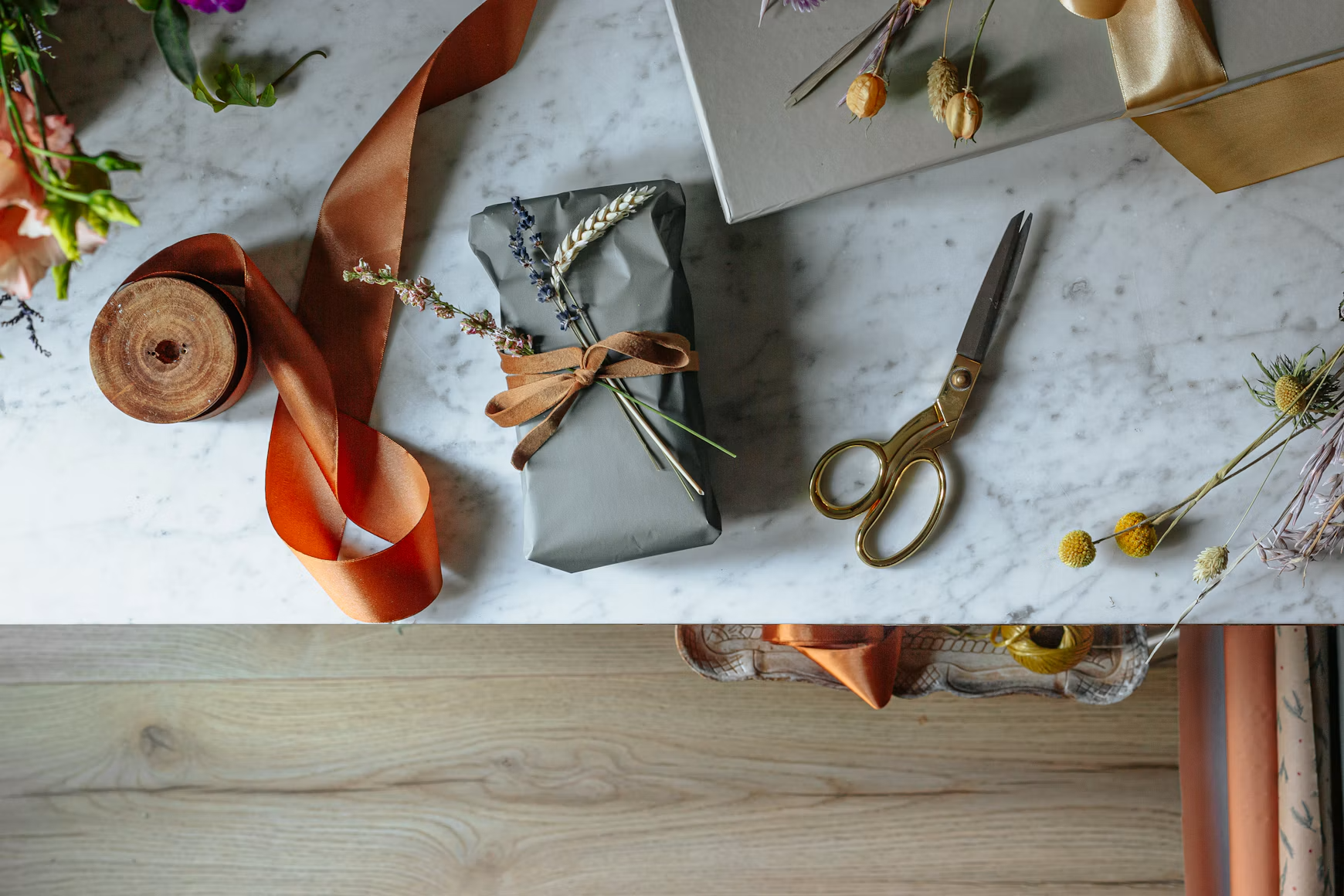
- Upgrade the finish with a clean wrap and one statement embellishment: Wrap in kraft paper, plain tissue, or fabric, then add one gift embellishment only: wax seal, dried orange slice, a sprig of rosemary, or a simple tag. The trick is restraint, one focal point reads intentional, while lots of extras can look busy. If you’re mailing it, keep embellishments flat and secure with a paper belly band.
- Use a limited palette and repeat it everywhere: Choose 2–3 colors max (I like cream + black + one accent like forest green). Repeat those colors in your ribbon, tag, insert, and even the product inside (think matching bath salts + label). This is an easy way to fake “brand-level” cohesion with materials you already own.
- Add texture with easy layers, not more stuff: Texture looks expensive because it creates depth. Try layering a vellum or tracing-paper wrap over a label, tying twine over satin ribbon, or slipping your PDF insert into a translucent envelope. You’re not adding clutter, you’re adding dimension.
- Make edges crisp: trim, crease, and align like you mean it: Use a ruler to measure your wrap, crease folds with the edge of a spoon, and trim tags to the same size. Straight lines and consistent spacing do more for perceived quality than fancy supplies. If you’re making multiple gifts, create a quick “template” on scrap paper so everything lands in the same spot.
- Turn basic containers into “apothecary” packaging: Reuse small jars and bottles, then remove old labels fully and add a simple new one. A plain white label with black text plus a batch date looks professional, especially for edible gifts, scrubs, or candles. Finish with a tamper-style seal: a strip of paper tape across the lid with a small initial stamp.
- Add a purposeful closure: belly band, tag + eyelet, or mini box sleeve: Closures are a sneaky luxury cue because they feel engineered. Try a paper belly band around a soap box, an eyelet tag tied with thin cord, or a sleeve around a small carton. The goal is to make opening the gift feel like an experience, not just unwrapping.
- Include a “how to use it” micro-guide for instant polish: Even one short paragraph, printed from your cleaned-up PDF insert, makes handmade items feel retail-ready. For tea blends: steep time + water temp. For knit items: washing instructions. For baked goods: storage time. It’s practical, and it quietly signals that you made this on purpose.
Handmade Gift Q&A: Make It Look Boutique
Q: What’s one cheap material that instantly looks high-end?
A: A heavy, matte cardstock label or tag can do more than fancy supplies. Keep the text minimal, trim it cleanly, and stick to one font style. Understanding how paper stock affects print quality can also help you achieve a more polished finish. If you can, punch a neat hole and tie it with simple cord for a tidy finish.
Q: How can I make a plain DIY gift feel “fancy enough” fast?
A: Treat packaging like part of the gift: presentation is key, so swap in a clean box, tin, or small bag you already have. Add tissue or a folded tea towel, then use one accent like ribbon or a herb sprig. The goal is intentional, not overloaded.
Q: Why do my handmade gifts look messy even when the item is great?
A: It’s usually alignment and adhesive. Recenter the label using light pencil marks, then reattach with double-sided tape to avoid glue ripples. Wipe smudges, and trim any uneven edges with a ruler and sharp scissors.
Q: Can I still make it look expensive if I’m on a tight budget?
A: Yes, limit yourself to two colors and repeat them across the tag, wrap, and note. Add one small “brand detail,” like a batch date or short care card printed on plain paper. Tiny consistency reads polished.
Q: How do I rescue a gift that looks too basic at the last minute?
A: Add a short, personal line about why you chose it, because personalization demonstrates thought and it changes the whole feel. Then create one clean closure, like a paper band or simple tied tag, to make opening it feel special.
Turn Simple Details Into Affordable Luxury Handmade Gifts
It’s frustrating when you’ve poured time into a handmade present, yet it still reads as “crafty” instead of special. The shift isn’t a bigger budget, it’s creative confidence and an intentional, boutique-minded approach where a few thoughtful choices carry the whole look. When you lean into those details, affordable luxury gifts start to feel natural, and the personalized gift impact gets louder than the price tag ever could. Luxury is what happens when a gift feels intentional, not expensive.