
The Role of Testing in Building Better Products
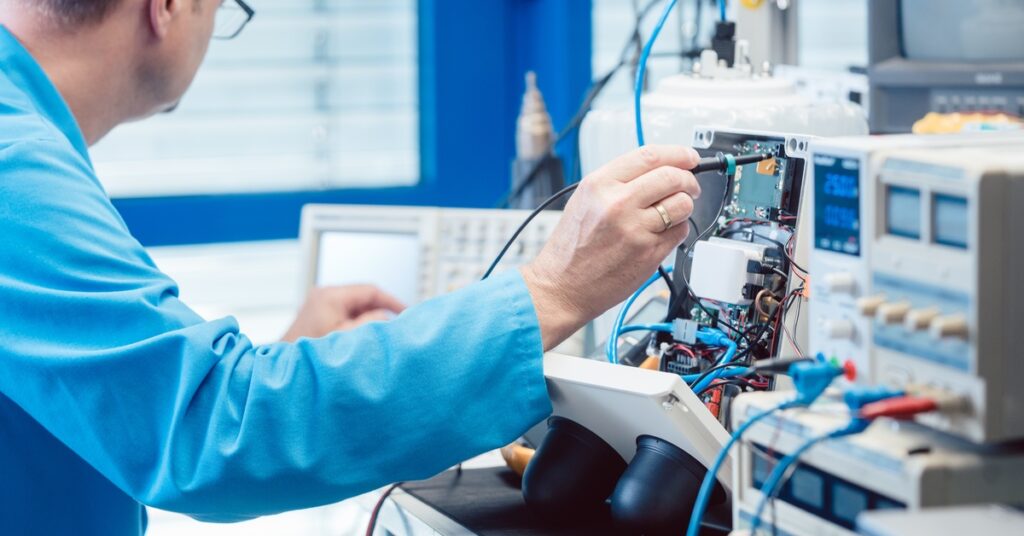
A product can look impressive on a drawing board and still disappoint once people begin using it. Materials behave differently under pressure, packaging fails during shipping, and seemingly minor inconsistencies can undermine an otherwise promising design. Testing provides a practical way to uncover these problems before they become expensive failures. Across industries, the role of testing in building better products extends beyond finding defects. It helps teams understand what customers need, validate assumptions, and make informed improvements throughout development.
Turning Ideas Into Measurable Results
Early concepts often depend on predictions about durability, usability, cost, and performance. Prototypes allow teams to replace those predictions with evidence. A manufacturer developing a reusable container, for example, might test how its lid seals after repeated opening, whether its handles remain comfortable under load, and how its surface responds to cleaning agents.
The value comes from defining success before the test begins. Clear benchmarks make results easier to interpret and prevent teams from changing expectations after seeing unfavorable outcomes. When a prototype misses a target, engineers can identify which design choices need attention instead of relying on guesswork. Testing is therefore a decision-making tool, not simply a final inspection.
Finding Weaknesses Before Customers Do
A defect discovered during development is generally easier to address than one discovered after distribution. Once a product reaches stores or customers, fixing the same issue may involve returns, replacement shipments, lost production time, and damage to the brand’s reputation. Early testing helps companies avoid that chain of consequences.
Stress testing, environmental exposure, and repeated-use trials can reveal weaknesses that ordinary demonstrations miss. A component might work perfectly at room temperature but become brittle in cold conditions. A label might remain legible on a shelf but fade after exposure to moisture. By recreating realistic conditions, teams can uncover vulnerabilities while they still have room to revise the product.
Making Safety Part of Development
Product safety cannot depend on appearance or intuition alone. Testing helps manufacturers evaluate potential hazards associated with materials, chemical composition, mechanical failure, and intended use. The right methods vary widely: a children’s product may require assessments of small parts, while a cleaning formulation may need stability and compatibility evaluations.
Specialized scientific expertise is particularly valuable when products contain complex compounds. In the cannabis sector, for instance, the work of chemists in product development and testing helps illustrate how formulation knowledge and laboratory analysis can inform quality decisions. The broader lesson applies across consumer goods: understanding what a product contains, how its ingredients interact, and how it behaves over time supports safer design choices.
Testing does not guarantee that every risk disappears. It creates a documented process for identifying foreseeable problems, evaluating their significance, and improving controls before a product is widely used.
Protecting Consistency at Scale
Producing one successful sample is different from manufacturing thousands of reliable units. Equipment settings drift, raw materials vary between shipments, and small changes in processing can affect the finished result. Quality testing helps teams determine whether those variations remain within acceptable limits.
Incoming material checks can catch unsuitable inputs before production starts. In-process measurements reveal problems while corrections are still possible. Finished-product evaluations confirm whether batches meet established requirements. Together, these checks give manufacturers a clearer picture of where inconsistency begins and how to reduce it.
Consistency also matters to customers—people expect the next purchase to perform like the last one. Reliable testing supports that expectation, especially for products where fit, strength, texture, or formulation must remain dependable.
Improving the Customer Experience
Laboratory results are essential, but they do not always capture the frustrations people encounter in daily life. A product can pass technical requirements and still be difficult to open, confusing to assemble, or uncomfortable to use. Usability testing fills this gap by observing how people interact with products under realistic circumstances.
Feedback can reveal issues that designers have become too familiar with to notice. Instructions may use unfamiliar terms. A control may be positioned awkwardly. Packaging may require more force than expected. These findings often lead to modest changes that substantially improve satisfaction.
The strongest development programs combine technical measurements with human feedback. One approach verifies that the product functions as intended; the other asks whether the intended function genuinely works for the people buying it.
Reducing Waste and Unnecessary Costs
Testing requires time, equipment, and trained personnel, so it may appear to slow development. Yet avoiding tests can create much larger costs later. Rejected batches, excess material use, warranty claims, and emergency redesigns consume resources that could have supported planned improvements.
Testing can also identify opportunities to use materials more efficiently. If performance trials show that a component meets requirements with less material, manufacturers may be able to reduce waste without sacrificing reliability. Process experiments can reveal which production settings deliver consistent results with fewer defects.
The goal is not to test everything endlessly. It is to choose meaningful evaluations, review the evidence, and concentrate effort where failure would be most consequential.
Using Results to Guide Continuous Improvement
Testing becomes most useful when findings circulate beyond the laboratory. Engineers, production teams, suppliers, and customer service staff may each hold information that explains a recurring issue. Bringing those perspectives together turns isolated results into practical changes.
A useful improvement cycle begins with a specific question, continues through controlled evaluation, and ends with a documented decision. Teams can then monitor whether the change performs as expected in regular production. Over time, this creates a record of what worked, what failed, and which assumptions deserve another look.
That ongoing process also helps companies respond to changing customer expectations and new materials. Rather than treating a product launch as the finish line, manufacturers can use evidence to refine future versions.
Building Trust Through Reliable Performance
Customers rarely see the tests behind a finished product, but they experience the results. A dependable item works as expected, survives normal use, and performs consistently across purchases. Those experiences shape whether people recommend a brand or return for another purchase.
This is why the role of testing in building better products deserves attention from the earliest design conversations through routine production. Thoughtful testing connects innovation with accountability. It gives businesses a stronger basis for decisions, helps prevent avoidable problems, and supports products that earn trust through performance rather than promises.