
How To Properly Inflate Your Car’s Tires
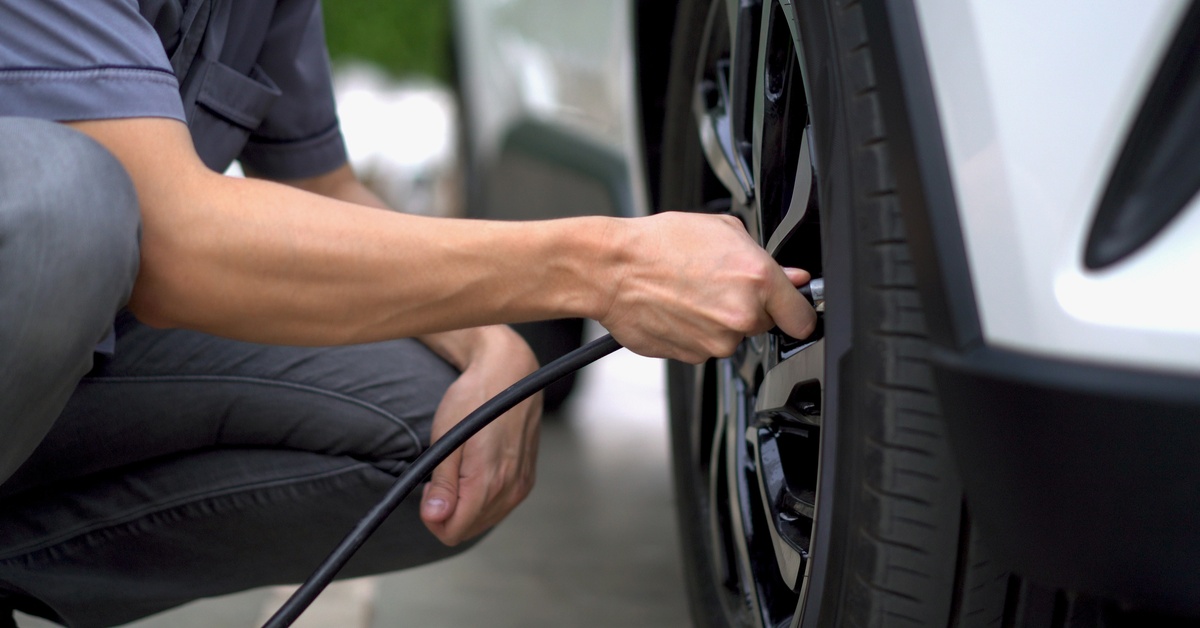
Tire pressure is one of those “small” things that quietly ruin comfort, braking, tire tread, and gas mileage. Here’s a simple, do-it-right routine you can knock out in 10 minutes.
Know Your Number (Don’t Trust the Sidewall)
Start with the recommended PSI for your vehicle, not the maximum number printed on the tire itself. The easiest place to find the right PSI is the driver’s door jamb sticker. Depending on the car, you might also see it inside the fuel door or in the owner’s manual. The sidewall PSI is typically a maximum rating for the tire, which is different from what your car is designed to run day to day.
Check Pressure When Tires Are “Cold”
For the most accurate reading, check tire pressure before or after driving. Driving heats up the tires and increases pressure, which can throw off your numbers and lead to underinflation once everything cools down again. Gauging your tires every now and again is also just a good habit year-round.
Use a Decent Gauge
A basic tire gauge beats guessing every time. Remove the valve cap, press the gauge straight onto the valve stem, and read the PSI. If the reading doesn’t match the door-sticker’s recommendation, you’ll know exactly how much air you need to add or release.
Inflate in Small Bursts, Then Re-Check
Properly inflating your tires can be as simple as adding air in short bursts, then checking pressure, and repeating. It’s better to creep up to the correct PSI than to overshoot and play the “let air out, check again” game. If you do go over, don’t panic. Most pumps and many gauges have a small release feature that lets you drop pressure a little at a time.
Don’t Forget the Other Tires
It’s easy to fixate on whichever tire looks low and forget the rest. If you’re checking one, check them all; a small difference adds ups eventually. Some vehicles use different PSIs for the front and rear. You can typically find those numbers on the door sticker. Don’t assume one number works for all four!
What About the TPMS Light?
TPMS is a warning system, not a precision gauge. If your tire pressure light pops on, confirm the actual PSI with a gauge and inflate to the recommended number. After you correct the pressure, the light may automatically shut off after a short drive; however, some may need a manual reset depending on the system.
Pressure Is Only Half the Battle: Extend Tire Life, Too
Proper inflation helps tires wear evenly, but it’s not the only factor. The lifespan of your tire also depends on regular rotation, keeping your alignment in check, and avoiding habits that accelerate uneven wear; like driving on underinflated tires because “it’s probably fine.”
Quick Cheat Sheet
If you want a straightforward way to remember how to properly inflate your tires, try this: check pressure monthly and before road trips, use the door sticker PSI, and always measure when tires are “cold.” Inflate slowly, re-check often, and aim for consistency. Do that and you’ll quickly get the hang of how to properly inflate your car’s tires and keep your ride feeling smoother while your tread lasts longer.